Skip to content
Investing in a commercial property on the South Shore requires a proactive approach to maintenance. Between the corrosive salt air in Plymouth and the high humidity of a Quincy summer, standard paint jobs often fail prematurely if not engineered for our local climate. If you are a facility manager or business owner planning your budget, understanding the actual commercial painting cost in our region is the first step toward protecting your asset.
At South Shore Painting Contractors, we know that commercial budgeting isn’t about finding the lowest number. It’s about finding the best long-term value. This guide provides a transparent look at the rates, labor factors, and technical requirements that define professional painting in Massachusetts today.
Average Commercial Painting Cost in the South Shore

Determining an average painting cost is difficult without a site walkthrough, but most projects fall into predictable brackets based on the scale of the facility. In Massachusetts, labor and insurance burdens are roughly 20% higher than the national average, which is reflected in local project totals.
Typical Cost Range by Building Size
- Small Retail or Professional Office (up to 3,000 sq. ft.): $5,500–$15,000. These projects usually involve storefront refreshes or interior office suites.
- Medium-Sized Commercial Buildings (5,000–12,000 sq. ft.): $20,000–$55,000. This often includes stand-alone medical offices, restaurants, or small multi-tenant plazas.
- Large Industrial or Shopping Centers (20,000+ sq. ft.): $70,000–$160,000+. Large-scale projects involve significant equipment costs and specialized coating systems.
Commercial Painting Rates per Square Foot
Standardizing your budget using commercial rates per square foot is the most accurate way to compare quotes. Keep in mind that paintable square footage includes the total surface area of walls and trim, not just the building’s footprint.
Exterior Commercial Painting Cost per Square Foot
For exterior work, expect a range of $3.50 to $7.50 per square foot. The variation depends on the substrate; for instance, painting porous brick or weathered cedar shingles requires more material and labor than coating smooth metal siding.
Interior Commercial Painting Rates
Interior rates are generally more affordable, ranging from $2.00 to $5.00 per square foot. Projects that require after-hours labor to avoid disrupting business operations will lean toward the higher end of this range.
Coastal Defense: Technical Factors That Drive Exterior Painting Costs
The cost to paint a commercial building exterior is heavily influenced by the pre-work required to ensure the paint actually sticks in our coastal environment.
Surface Preparation and Repairs
On the South Shore, preparation often accounts for 25% to 40% of the total labor. Skipping these steps ensures a coating failure within 24 months. Professionals focus on:
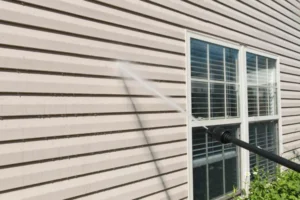
- Power Washing: Essential for removing the salt film that accumulates on properties in towns like Hingham and Scituate.
- Substrate Repair: Filling masonry cracks or replacing rotted wood trim to ensure the building envelope is watertight.
- Caulking and Sealing: High-grade elastomeric sealants are used to prevent moisture intrusion during the freeze-thaw cycles of a Massachusetts winter.
Proper preparation ensures the new coating adheres correctly and performs as expected. Cleaning surfaces, repairing damaged areas, and sealing joints help prevent premature peeling, moisture intrusion, and other failures that can shorten the lifespan of a commercial paint job.
Equipment and Safety Requirements
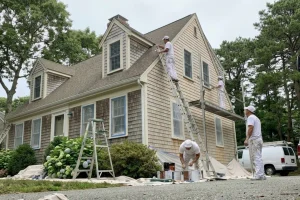
Painting Safety compliance is a major cost driver. In a commercial setting, we must adhere to strict OSHA fall-protection standards. This often includes:
- Aerial Lifts and Booms: Daily or weekly rental fees for buildings over two stories.
- Scaffolding: Necessary for intricate historic restorations where a lift cannot reach.
- Containment: Protecting parked cars, neighboring properties, and pedestrians from overspray or debris.
Commercial painting often involves working at height and around active properties, which requires specialized equipment and strict safety procedures. These measures protect workers, surrounding property, and the public while allowing the project to move forward efficiently.
Commercial Building Repainting Cost vs. First-Time Painting
Understanding commercial repainting costs is vital for long-term maintenance planning. Interestingly, repainting an older building is often more expensive than painting a new one because of the removal phase.
Typical Repainting Timeline for Commercial Buildings
To avoid a massive structural repair bill, we recommend the following repainting cycles for South Shore properties:
- High-Exposure Coastal Buildings: Every 5 years
- Inland Brick or Masonry: Every 8–10 years
- Commercial Metal Siding: Every 10–12 years
These timelines help property owners plan maintenance before visible deterioration begins. Repainting at the right interval protects the building envelope, maintains curb appeal, and prevents minor wear from turning into costly structural repairs.
What Factors Affect Commercial Painting Cost the Most
Beyond size, several variables can shift your estimate:
- Building Accessibility: Can we use a lift, or do we need to hand-climb scaffolding? Difficult access always adds to the labor hours
- Surface Material: Metal requires different primers and paints than brick or EIFS (stucco)
- Paint Quality: We use commercial-grade coatings like Scuff-X for interiors or high-build acrylics for exteriors. While they cost more per gallon, they last twice as long as residential-grade paint
These variables determine how much labor, equipment, and material the project requires. Evaluating them early allows contractors to produce a more accurate estimate and helps property owners understand where costs may increase.
Cost Breakdown of a Commercial Painting Project
A transparent quote from a reputable contractor should look like this:
- Labor (65-70%): Includes skilled wages, workers’ compensation, and site management
- Materials (15-20%): High-performance coatings, primers, and consumables
- Equipment & Overhead (10-15%): Lift rentals, safety gear, and permits
Understanding how costs are distributed makes it easier to evaluate contractor quotes and compare proposals. A clear breakdown also shows where the majority of the investment goes and helps property managers budget more effectively for future maintenance.
How to Estimate the Cost to Paint Your Commercial Property
If you are building a budget, you can perform a preliminary assessment using these steps:
- Measure the Building and Surface Areas
Calculate your vertical square footage by measuring the length and height of each wall. Subtract large window banks and loading docks to avoid overestimating material needs.
- Identify Surface Repairs and Preparation Needs
Walk the perimeter. Are you seeing peeling paint or masonry cracks? Addressing these surface deficiencies now prevents change orders later that can inflate the final commercial building repainting costs.
- Request Detailed Quotes from Licensed Contractors
Always solicit bids that offer a line-item breakdown of labor, materials, and safety equipment. This transparency allows you to compare quotes accurately rather than just looking at the bottom number.
How to Choose the Right Commercial Painting Contractor in South Shore

When evaluating your total commercial painting cost, the cheapest bid is often the most expensive in the long run. If a contractor lacks the proper credentials for a Massachusetts commercial site, the hidden risks of poor workmanship or liability can far outweigh any initial savings.
Verify Licensing, Insurance, and Safety Standards
In Massachusetts, a professional contractor must carry significant liability and workers’ compensation insurance. Choosing a low-ball bidder who lacks these protections leaves the property owner liable for on-site accidents. Always ensure your partner follows OSHA fall-protection standards to protect both their crew and your business.
Review Previous Commercial Projects
Always ask for local references and a portfolio of completed work. South Shore Painting Contractors helps local businesses maintain durable, professional-looking properties through transparent planning and expert execution. Contact us today for a transparent commercial painting estimate that accounts for the unique needs of your South Shore facility.
FAQs
1. How much does commercial painting cost per square foot in South Shore, MA?
In 2026, the local rate typically ranges from $2.50 to $7.00 per square foot. This includes labor, materials, and the high insurance costs required by Massachusetts law. Factors like building height and surface condition will determine where your specific project falls within that range.
2. How often should a commercial building be repainted in Massachusetts?
Most properties need a full repaint every 5 to 8 years. Buildings closer to the ocean may need more frequent maintenance coats on the seaside-facing walls to prevent salt-air corrosion from reaching the substrate.
3. What is the average cost to paint a commercial building exterior?
For a standard 5,000-square-foot facility, the average cost ranges from $18,000 to $35,000. This includes professional power washing, minor repairs, and two coats of high-durability commercial paint.
4. Do commercial painting projects require permits in Massachusetts?
Standard painting usually does not require a building permit. However, if your project involves structural repairs, significant scaffolding on public sidewalks, or historic district approvals (common in towns like Hingham), a permit or board review may be necessary.
5. How long does a commercial painting project usually take?
A medium-sized exterior project typically takes 1 to 2 weeks. This includes 2 days for preparation and 3 to 5 days for application, depending on weather conditions. Interior projects can often be completed faster or during off-peak hours to minimize business disruption.
6. Are there any seasonal considerations for commercial painting?
Yes, extreme temperatures or humidity can affect paint adhesion. Late spring through early fall is often ideal for South Shore projects to ensure proper curing and a lasting finish.